STEM Profiles

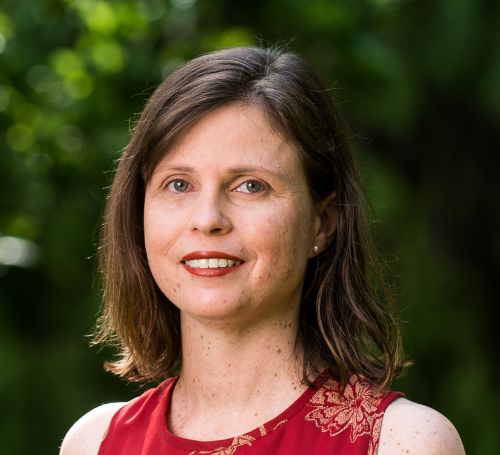
Jenny all fields Test

Technologiest
Townsville
[Need to add short contact form here to keep email address private. Contact form/button will only show if they are open to being contacted]

Bio

I’m a biomedical engineer working on practical health technologies that improve patient outcomes. My work combines design, research and collaboration with clinicians to develop solutions that are safe, accessible and useful in real-world settings.

Guiding principle

I’m driven by the idea that innovation should be inclusive, ethical and grounded in the needs of real communities.

Expertise

medical devices, biomedical engineering, product design, health technology, clinical innovation

Who is a woman in a STEMM field that you admire, or who has influenced your work?

Dr. Fiona Wood has influenced me through her commitment to translating research into practical medical innovation, showing how STEMM can directly improve lives and support better outcomes for patients.

What’s a problem in your field that keeps you up at night, and why does it matter to you personally?

The inequity in access to safe, affordable health technology concerns me most. It matters personally because good design should not only benefit people with the most resources; it should reach the communities who need it most.

Can you describe a moment in your work that completely changed how you think about your discipline?

During a hospital trial, I saw how a technically successful device could still fail if it didn’t fit the workflow of clinicians and patients. It changed how I think: good engineering is not just accuracy or performance, but usability, trust and context.

What’s something about your field that most people misunderstand or overlook?

Many people think biomedical engineering is mainly about inventing new devices, but the overlooked part is making them safe, usable and practical in real clinical settings. A good solution has to work for patients, clinicians and health systems.

When have you taken a risk in your career, and what did you learn from it (regardless of the outcome)?

I moved from a secure research role into a product development project with many unknowns. I learned that risk can be productive when it is grounded in purpose, good evidence and a willingness to ask for help.

What’s a small, everyday habit or mindset that has made a big difference in how you approach your work?

I make a habit of asking, “Who will actually use this, and what do they need?” Keeping the end user in mind throughout a project helps me make better decisions and focus on outcomes rather than just technical achievements.

If you could collaborate with anyone (past or present, in or outside STEMM), who would it be and what would you want to explore together?

I would love to collaborate with Dr. Fiona Wood to explore how emerging technologies can be translated more quickly into practical healthcare solutions, while ensuring they remain accessible, safe and focused on patient needs.

What role does creativity play in your work, and how do you nurture it?

Creativity is essential in biomedical engineering because every challenge has technical, human and practical dimensions. I nurture it by seeking perspectives outside my field, talking to end users and giving myself time to explore ideas before jumping to solutions.

How do you navigate moments of doubt or failure in high-stakes or highly technical environments?

I try to separate the problem from my emotions about it. In high-stakes situations, I rely on evidence, trusted colleagues and a structured process. Failure is never comfortable, but it often provides the insights needed to make the next solution stronger.
What change, big or small, would you most like to see in the culture of STEMM fields over the next decade?

I would like to see STEMM cultures place greater value on diverse career paths, perspectives and lived experiences. Innovation is stronger when people feel they belong, can contribute authentically and are recognised for more than a traditional definition of success.

What is the thing you enjoy most about your role?

What I enjoy most is seeing an idea move from concept to something that genuinely helps people. Collaborating with diverse teams to solve complex problems and then seeing the real-world impact of that work is incredibly rewarding.

What drew you to your field in the first place?

I was drawn to biomedical engineering because it sits at the intersection of science, technology and human impact. I loved problem-solving and wanted to apply technical skills in a way that could directly improve people’s health and quality of life.